ProVision™

Dramatic time/cost efficiencies for planning, provisioning, and management of network infrastructure
Integrated object-based permissions give you delegation power for global network resource administration

Our mission is to create the software infrastructure needed to provision network-enabled devices by providing a flexible and dynamic management platform that can work from the cloud or behind the firewall. The engineering team at 6connect has taken the feedback from our global customer base and integrated it into a provisioning platform that serves as a source of constant innovation and growth. This approach to software has allowed our customers to not only modernize their infrastructure seamlessly but to adapt to emerging technologies without exacerbating their current challenges.
The Challenges of Network Provisioning
Provisioning and configuring networks are manually intensive processes focused on individual, vendor-specific, network elements rather than the holistic provisioning of data centers across distributed networks and virtual environments. These manual configurations cannot keep up with dynamic networks of today – thus creating outage risks for the network and data center that forfeit revenue, customer trust, and delay the introduction of new services.
How ProVision™ Works
ProVision, our unique Dynamic Network Provisioning (DNP) platform uses a robust Connector Library to automate the provisioning, configuration, and control of devices across distributed networks present in datacenters around the world. DNP’s REST API provides easy integration and helps automate complicated and frequent network provisioning workflows for innovative customers like NTT Data, PCCW, Swisscom, iLand Cloud Infrastructure, Flexential, and CyrusOne.
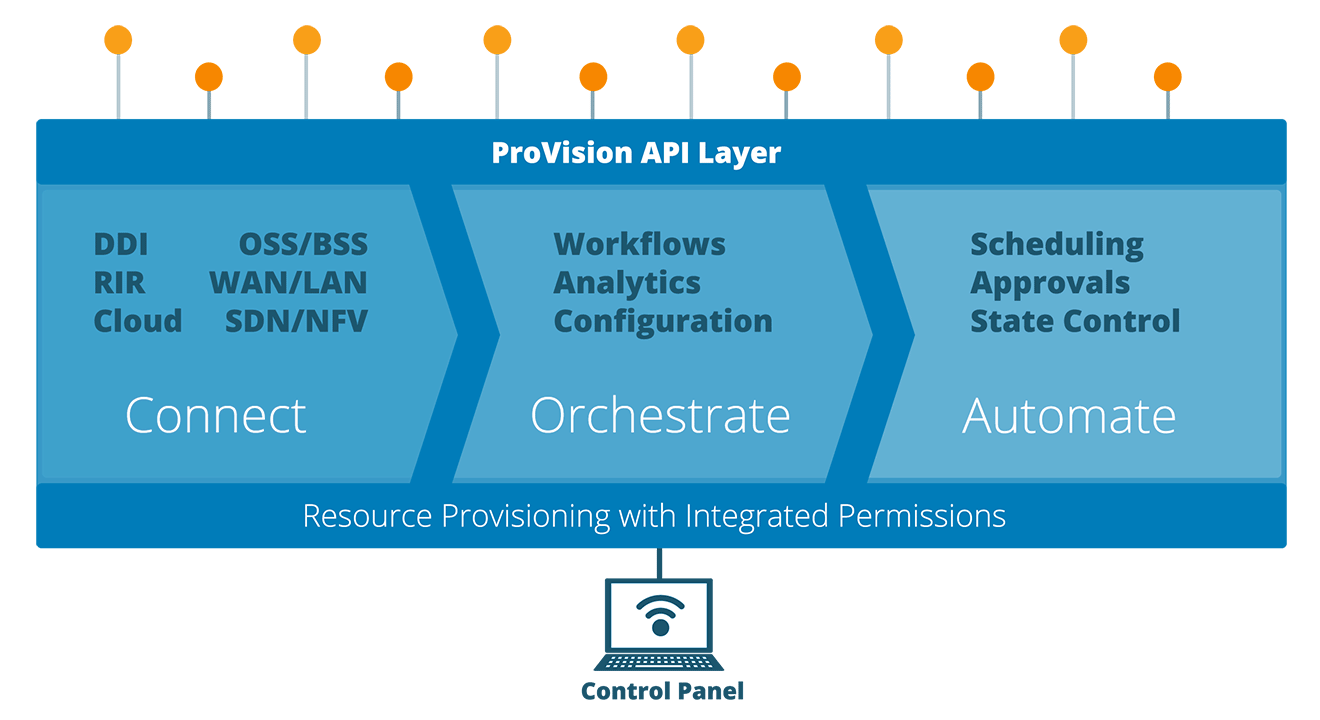
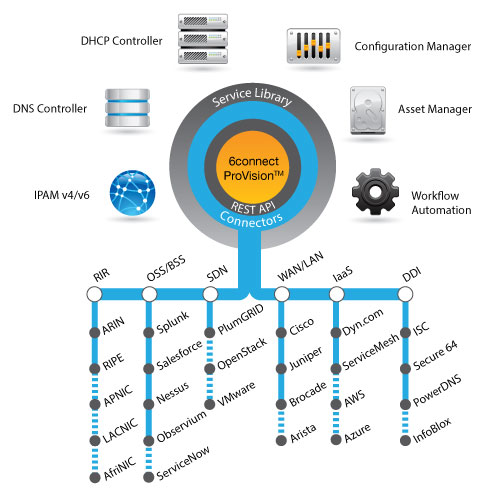
Our Service provider customers use our Connectors to control, interact and automate various infrastructure services through a unified interface. With the Connector Library supporting technology partners like ISC, Secure64, KnotDNS, Dyn, NS1, DNS Made Easy, PowerDNS, Cisco, Juniper, Brocade, Splunk, Salesforce and even RIR integration (ARIN, RIPE, etc.) – this flexible approach to provisioning allows customers to accelerate service delivery time, accurately provision complex network protocols, and dramatically reduce network complexity and costs.
ProVision Features
Service Provider workflows built-in – Functionality like a communication management for Peering, Multiple LIR support and RIR integration – these are features that save you time from first install. Feature updates like ProVision’s automatic IP address Geofeeds are key to helping your operations team stay ahead of manual tasks.
Global permissions structure for each object – you have the ability to create groups and user accounts, but you can also set permissions down to the level of detail you need for any object in ProVision.
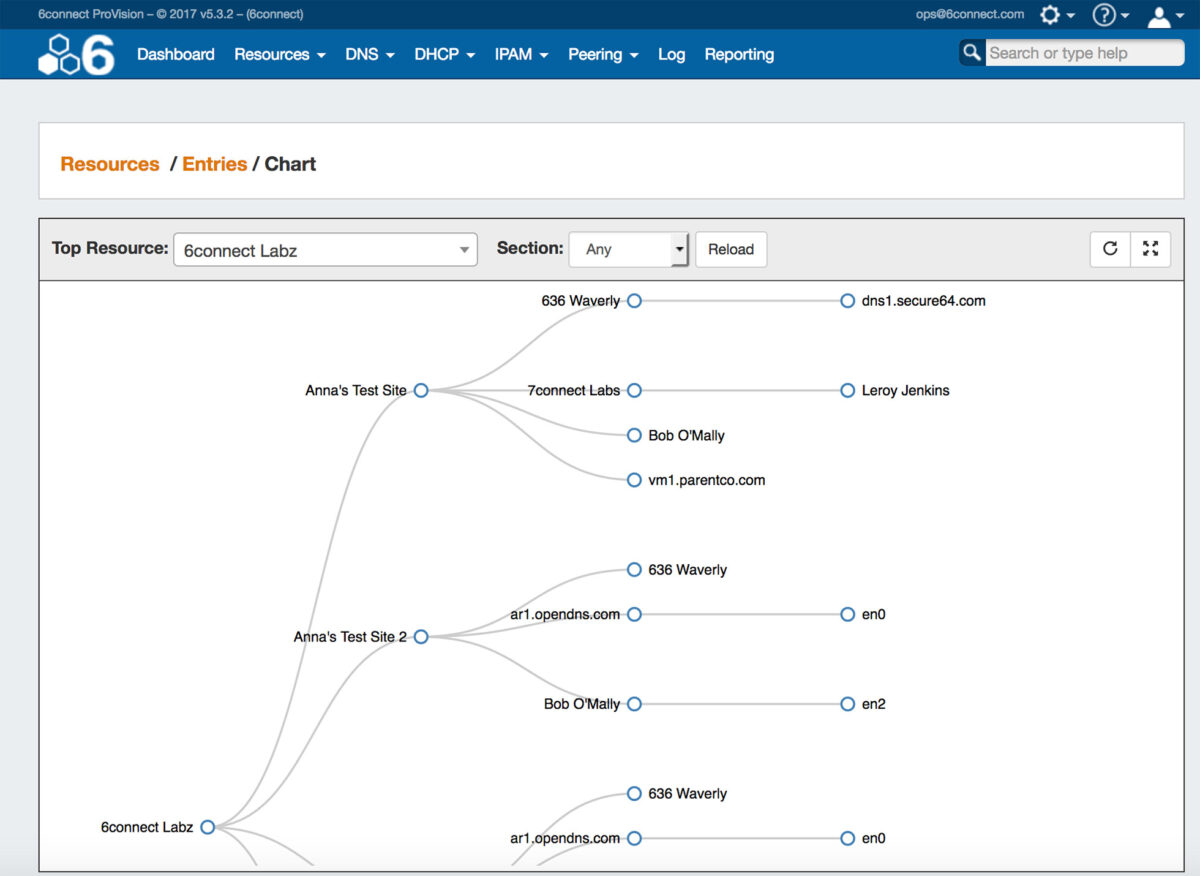
Resource Manager – Completely customizable resource management with flexible container structures, fields, permissions and workflow integration – all driven by API. Track everything from cross-connects to customers in one place.
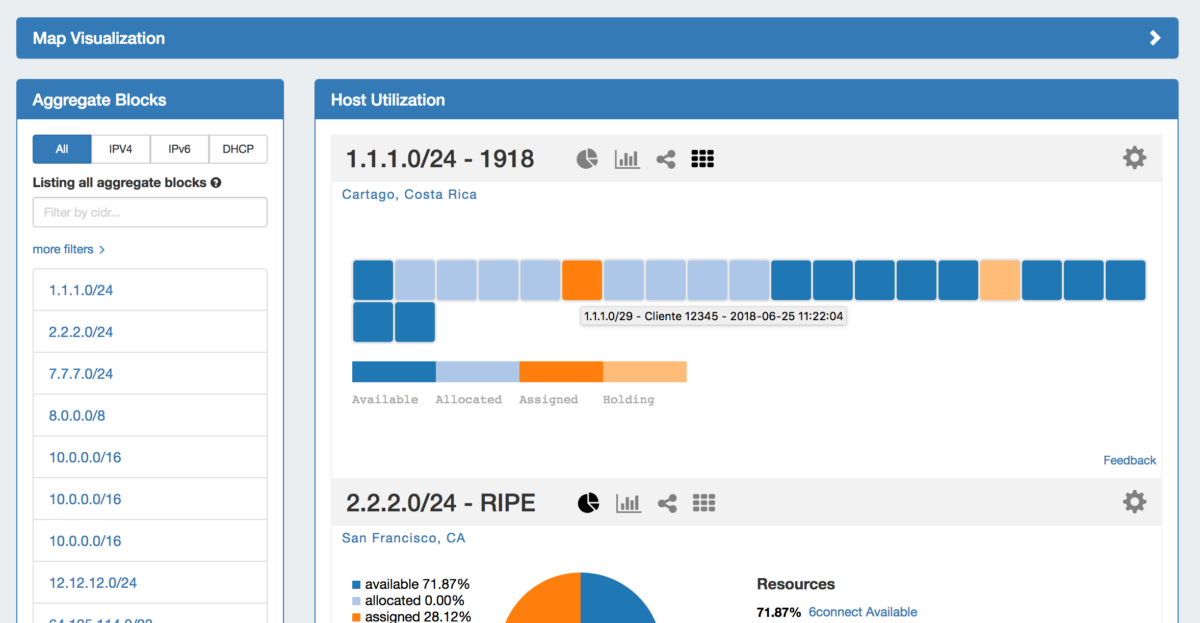
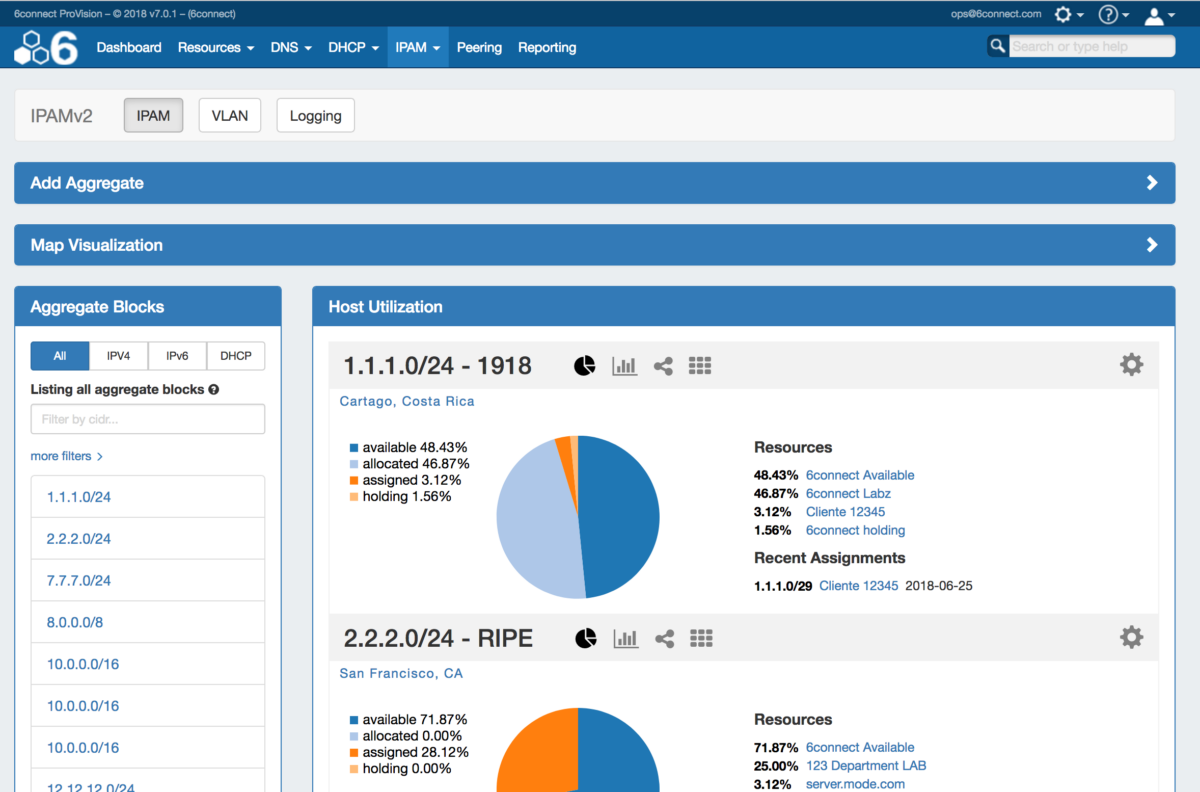
IPAM – Complete IPv4/IPv6 support that can handle everything from subnet allocation management to host-level assignments to devices, comes with import tools and top-notch support to get up and running quickly. ProVision also supports querying multiple IPAM data sources so you don’t have to import any data directly just to get visibility. ProVision IPAM also supports advanced field validation and features like IPv6 Sparse Allocation, VRFs, VLANs and even Geofeed creation.
DNS Controller – Multiple DNS servers with different DNS technologies and users? No problem! We integrate out of the box with a variety of DNS providers and platforms which gives you the flexibility to work with your current infrastructure “as is” and ease DNS migration(s) in the future as needed. With DNS Groups, you have easy support for duplicate zones and even the most complicated DNS environments. ProVision also offers built-in support for role-based permissions and Approval workflows at the DNS Group, DNS Zone and DNS Record level.
DHCP Controller – One stop configuration management for DHCP scopes? All available via API or GUI for easy integration and use by your provisioning teams. Supports ISC and Cisco Prime Network Registrar (via REST API) and is integrated with ProVision IPAM and DNS Modules.
Peering Manager – One-click multi-router configuration of BGP sessions across peering exchanges with included workflow features for communications tracking across exchanges. ProVision can also interact with your IMAP email service for even more automation options.
REST API – Built-in API means simple integration into your current environment without sacrificing support for your future environment.
The ProVision™ Architecture
Screenshots